Scottsdale properties face distinct rodent dynamics based on elevation and architectural style. In central and southern areas like McCormick Ranch and Gainey Ranch, flood irrigation and mature citrus orchards create…
Scottsdale properties face distinct rodent dynamics based on elevation and architectural style. In central and southern areas like McCormick Ranch and Gainey Ranch, flood irrigation and mature citrus orchards create foraging corridors for invasive roof rats. These agile climbers use overgrown palm fronds and oleander hedges to access structural rooflines, gnawing through soft aluminum attic vents and pliable stucco corners. Farther north along the foothills of Pinnacle Peak Park, Troon North, Silverleaf, and Desert Mountain, indigenous pack rats build dense middens inside prickly pear stands, pool heater enclosures, and vehicle engine bays. These woodrats collect desert debris, wiring insulation, and architectural materials, causing immediate fire hazards and costly electrical repairs.
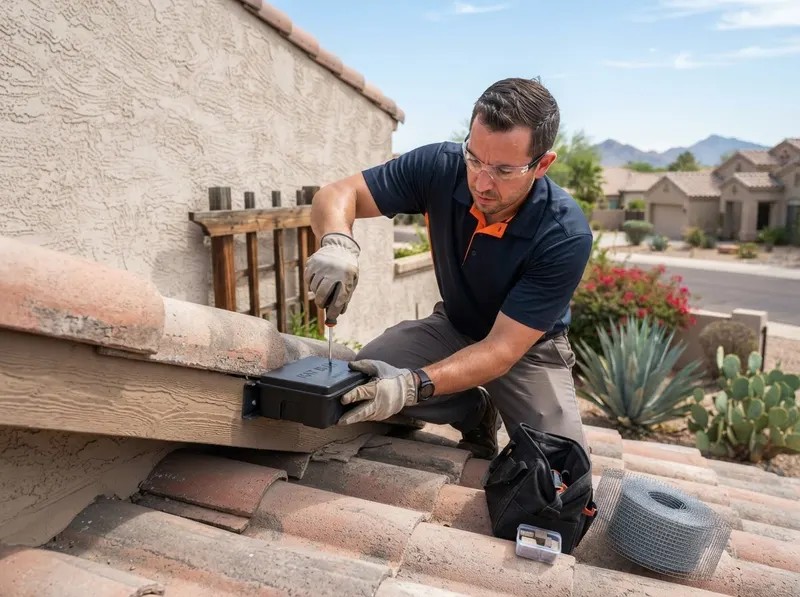
Effective rodent biosecurity prioritizes physical exclusion rather than open chemical baiting that endangers non-target desert wildlife like owls, hawks, and neighborhood pets. If rodent sounds are confined entirely to exterior landscape boulders or detached cactus gardens, localized habitat modification and harborage removal solve the issue. If scurrying occurs inside ceiling drywall, drop ceilings, or attic insulation above bedrooms, full structural exclusion becomes mandatory. Technicians install rigid 16-gauge, 1/4-inch galvanized hardware cloth over attic gable vents, seal plumbing penetrations with metal flashing, and affix micro-mesh barriers along foundation weep screeds. The architectural trade-off requires sealing every breach larger than 0.5 inches without choking the continuous ventilation required by Sonoran attic spaces during summer heat exceeding 115 degrees.
Property managers and homeowners avoid recurring rodent entries by establishing systematic physical barriers rather than signing open-ended chemical contracts. 1. Technicians survey the entire roof perimeter, tile eaves, HVAC conduits, and foundation lines to mark active entry holes. 2. Specialists seal structural entry voids using chew-proof steel barriers, elastomeric sealants, and copper mesh. 3. Mechanical snap-traps inside tamper-resistant security boxes collect the trapped interior population within 7 to 14 days. 4. Field specialists remove exterior pack rat middens, clearing nesting materials from under decorative boulders and engine compartments to permanently eliminate pheromone trails.
Every job gets a firm, written price after a free on-site visit.
Tell us about your roof rat & pack rat management job in Scottsdale and we'll send a clear, written quote, usually the same day.
 Desert Finch Pest Control