Securing a residential property requires a reliable pest control service in Scottsdale tailored directly to the predatory wildlife of the Sonoran Desert. Homeowners navigating desert wash corridors need targeted perimeter treatments that halt bark scorpions, subterranean termites, and roof rats before interior spaces are compromised.
A professional pest control service in Scottsdale is a specialized bio-security intervention that eliminates desert target pests, reinforces structural weep screeds, and manages venomous wildlife without compromising child and pet safety.
Every service reflects the same meticulous attention to detail, whether it's a single job or a larger pest control service project across Scottsdale.
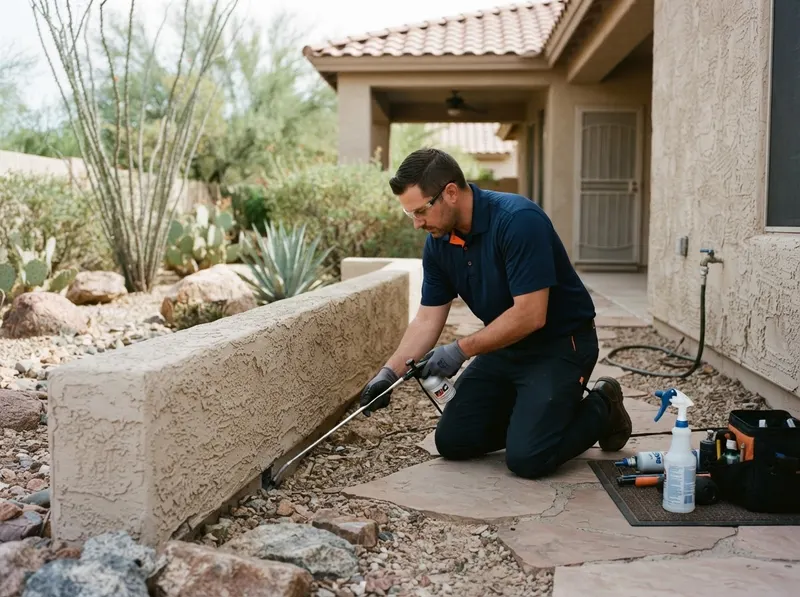
Scottsdale properties along natural desert washes require targeted blacklight inspections, stucco weep screed micro-mesh sealing, and perimeter applications of micro-encapsulated pyrethroids that neutralize bark scorpions without endangering family pets. Technicians systematically map outdoor harborage locations within landscape boulders, decomposed granite beds, and decorative flagstone borders, eliminating localized populations through micro-fine crack and crevice injections. By installing custom-fitted stainless steel or woven copper wire cloth inside structural weep screeds, technicians close the subterranean entry routes that scorpions utilize to navigate directly from perimeter soil grades into exterior stucco wall voids and interior baseboard tracks.
Get a quote →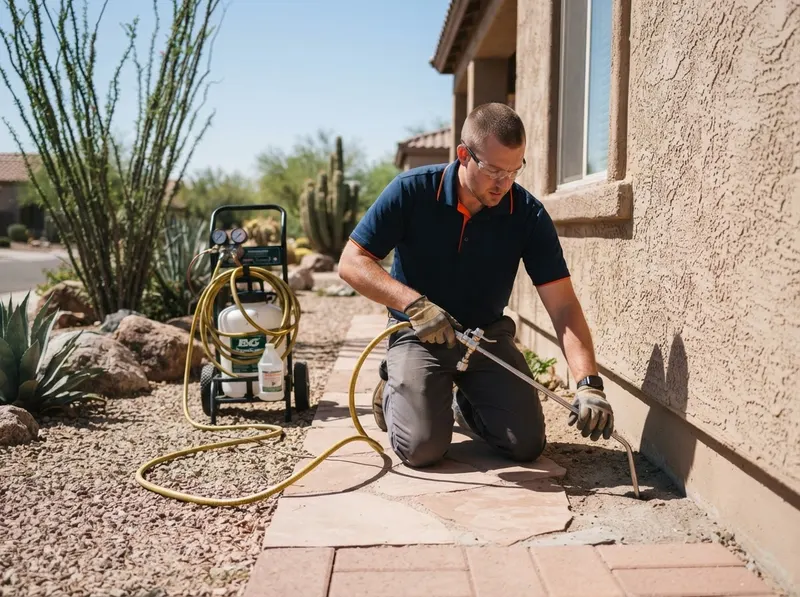
Desert subterranean termites forage through concrete expansion cracks and structural stem walls; treatment utilizes non-repellent liquid termiticides trench-applied around foundation perimeters to transfer through the colony and protect interior framing. Crews excavate continuous four-to-six-inch subterranean trenches through perimeter gravel, turf, and desert soil beds, applying precise termiticide volumes calibrated to establish continuous chemical zones beneath the stem wall. For masonry expansion joints and garage slabs abutting living quarters, precision horizontal sub-slab rod injections deliver termiticide blankets to intercept worker termites traversing moisture gradients beneath concrete pads before structural ceiling trusses or drywall partitions sustain damage.
Get a quote →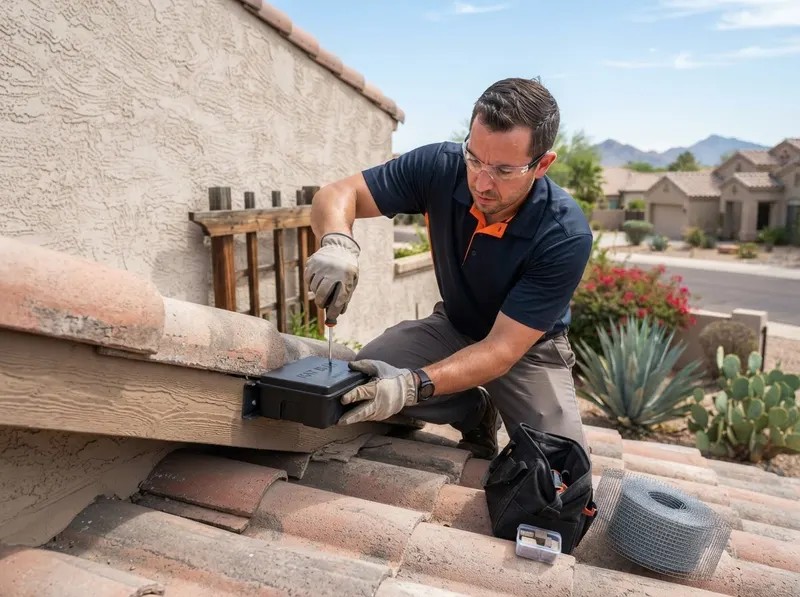
Roof rats utilize citrus canopies and tile roofing while white-throated pack rats target vehicle engine wiring; eradication requires heavy-gauge steel mesh exclusion, harborage clearing, and tamper-resistant exterior bait containment. Service specialists inspect attic perimeters, roof eaves, and air conditioning line chaseways to identify gnaw marks, rub tracks, and droppings, sealing all breaches exceeding one-quarter inch using twenty-gauge wire cloth and polyurethane expanding foams. Exterior remediation includes removing dense cholla cactus caches, mesquite pods, and underbrush piles within thirty feet of garages, safeguarding electrical harnesses and mechanical crawlspaces from severe rodent destruction.
Get a quote →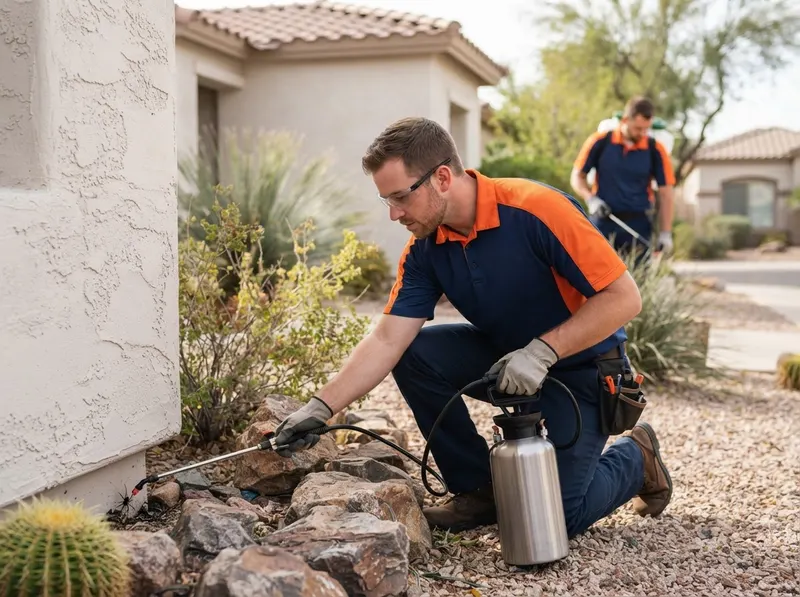
Targeted de-webbing and focused crack-and-crevice treatments neutralize Arizona black widows and brown spiders inhabiting pool pump enclosures, block wall weep holes, and garage baseboards. Desert spiders build cobwebs inside dark, undisturbed mechanical vaults, irrigation control boxes, and covered outdoor patio furniture, waiting for nocturnal insects. Our specialists systematically clear accumulated webbing with telescoping electrostatic poles, applying targeted residual dusts and fast-acting contact aerosols directly into void zones to collapse adult spider populations, eliminate attached silken egg sacs, and prevent venomous spider bites in human activity areas.
Get a quote →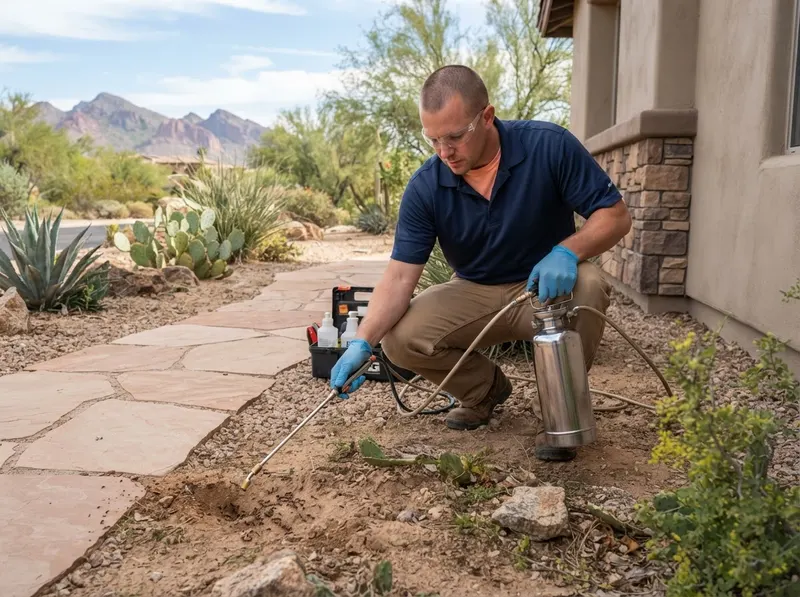
Southern fire ants and rover ants invade paver joints, irrigation boxes, and kitchen plumbing chases; treatment combines species-specific protein baits with targeted non-repellent perimeter applications to collapse the subterranean queen chamber. Field technicians identify foraging ant trails to deliver dual-matrix granular and gel formulations that foraging worker ants transport directly into subterranean brood chambers. This social distribution eliminates internal queens and larvae without triggering defensive colony budding, while exterior non-repellent liquid barrier bands applied to foundation footings prevent satellite ant groups from establishing indoor kitchen and bathroom nests.
Get a quote →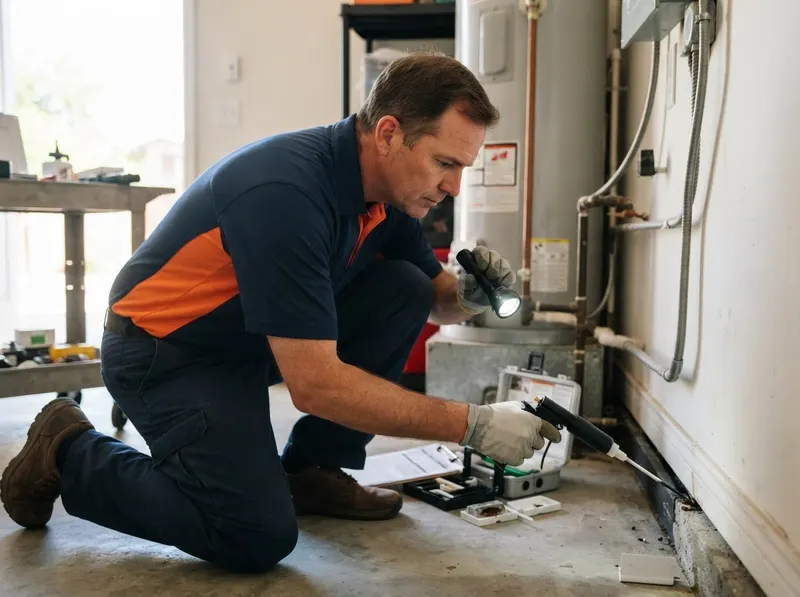
German cockroaches inside pantries and outdoor sewer roaches rising through dry plumbing traps require precision insect growth regulators, micro-gel bait matrices, and mechanical drain-valve installations to achieve total eradication. Technicians identify nesting foci behind kitchen appliances, warm electrical compressor housings, and hollow cabinetry, applying micro-gel baits with targeted spot treatments that disrupt reproduction without airborne aerosol drift. For outdoor American and Turkestan roaches harbored in decorative landscape pavers and utility access points, micro-encapsulated perimeter barriers and biological drain foamings eliminate nocturnal swarming.
Get a quote →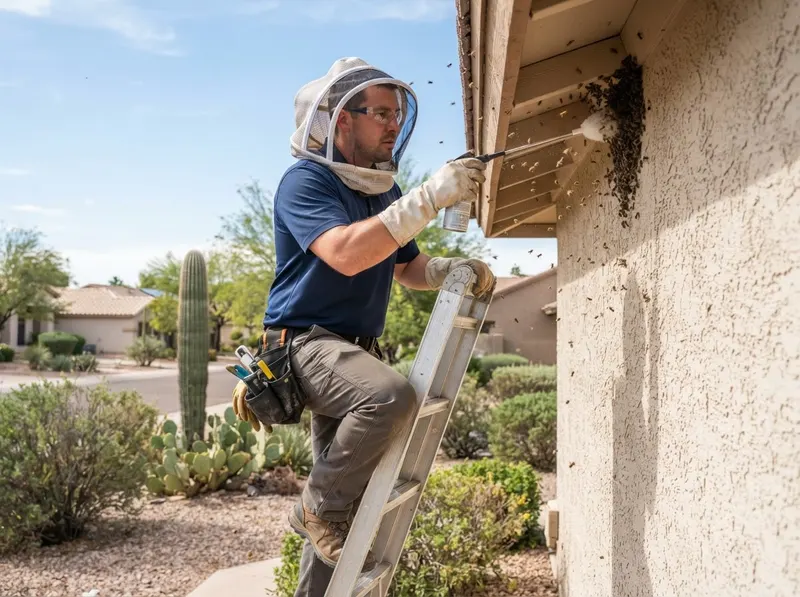
Paper wasps nesting beneath stucco eaves and defensive feral honeybee swarms inside irrigation vaults are resolved through pole-injected aerosol knockdowns, physical hive extraction, and pheromone-masking deterrent washes. When elevated ambient heat accelerates defensive stinging insect behavior, technicians utilize specialized protective gear to isolate nest structures hidden behind Spanish tile terminations, metal architectural flashing, and dry ground cavities. Following hive or comb extraction, technicians scrape remaining structural anchors clean and apply enzymatic surface cleansers that disguise lingering pheromone trails, preventing newly arriving swarms from reoccupying the nesting site.
Get a quote →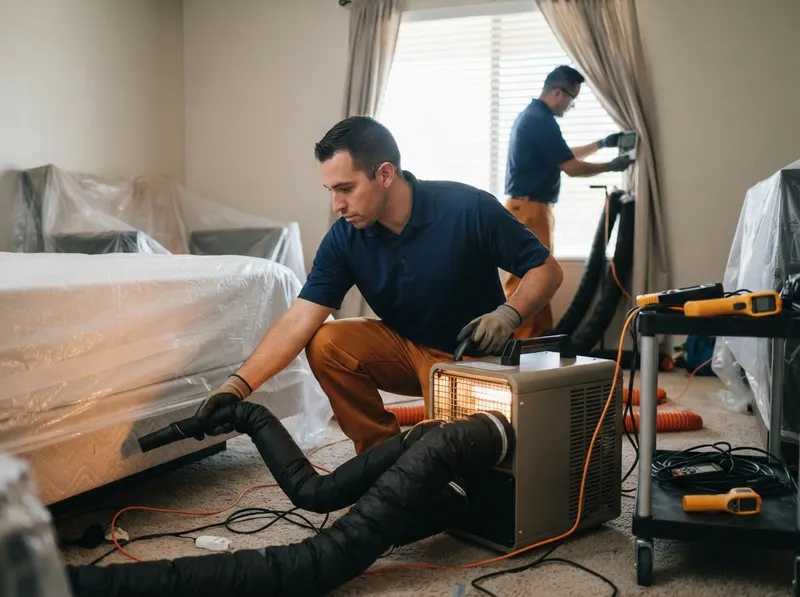
Thermal convection remediation elevates room air temperatures past 122 degrees to eradicate bed bug adults, nymphs, and eggs hidden deep in box springs and baseboard seams during a single-day treatment process. Industrial high-output thermal air heaters and multi-directional airflow fans circulate regulated, clean, heated air through targeted living quarters, penetrating deep into mattress cores, upholstered headboards, and perimeter wall cavities where conventional topical liquids cannot reach. Real-time digital wireless temperature probes verify that all structural substrates reach lethal thermal kill zones, resolving resistant infestations without chemical odors or textile staining.
Get a quote →You get a firm, itemized quote for your pest control service before any work begins, no surprises, no pressure.
Careful prep, tidy work, and a full cleanup when we are done. We treat your home and belongings like our own.
The same trusted, background-checked team from the first call to the final check.
Property owners facing desert pests must balance treatment duration with chemical exposure and structural sealing. If you discover bark scorpions in nursery spaces, bedroom floorboards, or closets, choose structural exclusion paired with micro-encapsulated perimeter barriers. Structural exclusion physically blocks weep screeds and foundation expansion joints with non-corrosive mesh, while micro-encapsulated formulations adhere to heated desert aggregate without breaking down quickly.
If your primary threat is subterranean termites silently hollowing out pine structural framing behind desert stucco, select non-repellent liquid soil trenches or targeted exterior bait stations. Non-repellent liquid applications eliminate colonies through social contact transfer, whereas bait systems track colony foraging over time. The trade-off between exterior biological exclusion and intensive whole-home perimeter treatment is initial installation labor versus ongoing recurring cost: physical structural exclusion demands a larger initial physical investment but permanently blocks access gaps larger than one-sixteenth of an inch, whereas perimeter spray maintenance requires quarterly service intervals to refresh liquid barriers degraded by UV radiation and monsoon flash floods.
When addressing desert roof rats nesting in mature citrus groves or palm fronds, select tamper-resistant mechanical bait stations paired with tree-clearing buffer zones; avoiding broadcast poisons prevents secondary toxicity hazards for residential hunting dogs and native desert raptors. If you manage an expansive equestrian property or hillside parcel near Troon North or Desert Mountain, ground burrowing pests like pack rats and rock pocket mice require mechanical harborage reduction combined with heavy-gauge galvanized steel hardware cloth buried 12 inches below the desert topsoil, whereas standard suburban lot layouts in McCormick Ranch or Gainey Ranch require focused drip-line moisture remediation and masonry block wall weep-hole netting. Evaluating structural exposure against insect biology ensures every applied countermeasure delivers measurable barrier performance without blanket chemical saturation.
Homeowners can reach our field assessment desk at (833) 659-9933 to discuss physical exclusion layouts or text property photos for a preliminary review.
Every project gets a firm, written price after a free on-site visit. Ranges below for orientation.
Tell us about your pest control service job and we'll send a clear, written quote, usually the same day. Or just call and talk to a real Scottsdale pro.
(833) 659-9933
Scottsdale properties sit directly alongside the Scottsdale McDowell Sonoran Preserve and expansive desert washes, exposing foundations to relentless perimeter pest pressure. Ground surface heat regularly surpasses 140 degrees in peak summer, causing generic chemical treatments to vaporize rapidly and driving bark scorpions inward through stucco weep screeds. Effective bio-security in neighborhoods near Pinnacle Peak Park and Taliesin West requires heavy-duty micro-encapsulated formulas that withstand intense thermal stress and mechanical copper barrier exclusion designed specifically for local desert architectural construction. Furthermore, suburban estates adjacent to TPC Scottsdale, Salt River Fields at Talking Stick, and Scottsdale Fashion Square experience heavy irrigation runoffs that create artificial microclimates, harboring subterranean termites, German cockroaches, and invasive roof rats within lush backyard citrus trees and manicured golf corridor berms. Residential communities along Pima Road, Scottsdale Road, and Frank Lloyd Wright Boulevard demand specialized bio-security regimens that account for both high-density xeriscape environments and natural desert drainage corridors traversing Maricopa County. You can reach our local scheduling desk at (833) 659-9933 or text property photos to review structural weep screed conditions before treatment.
Free estimates for Scottsdale & the surrounding area.
 Desert Finch Pest Control